


style / Big Shirt
cloth / Hand Dyed Screen Print Cotton Batiste (Mud Dye)
Price /
Regular price
$795
Regular price
Sale price
$795
Unit price
per
Shipping calculated at checkout.
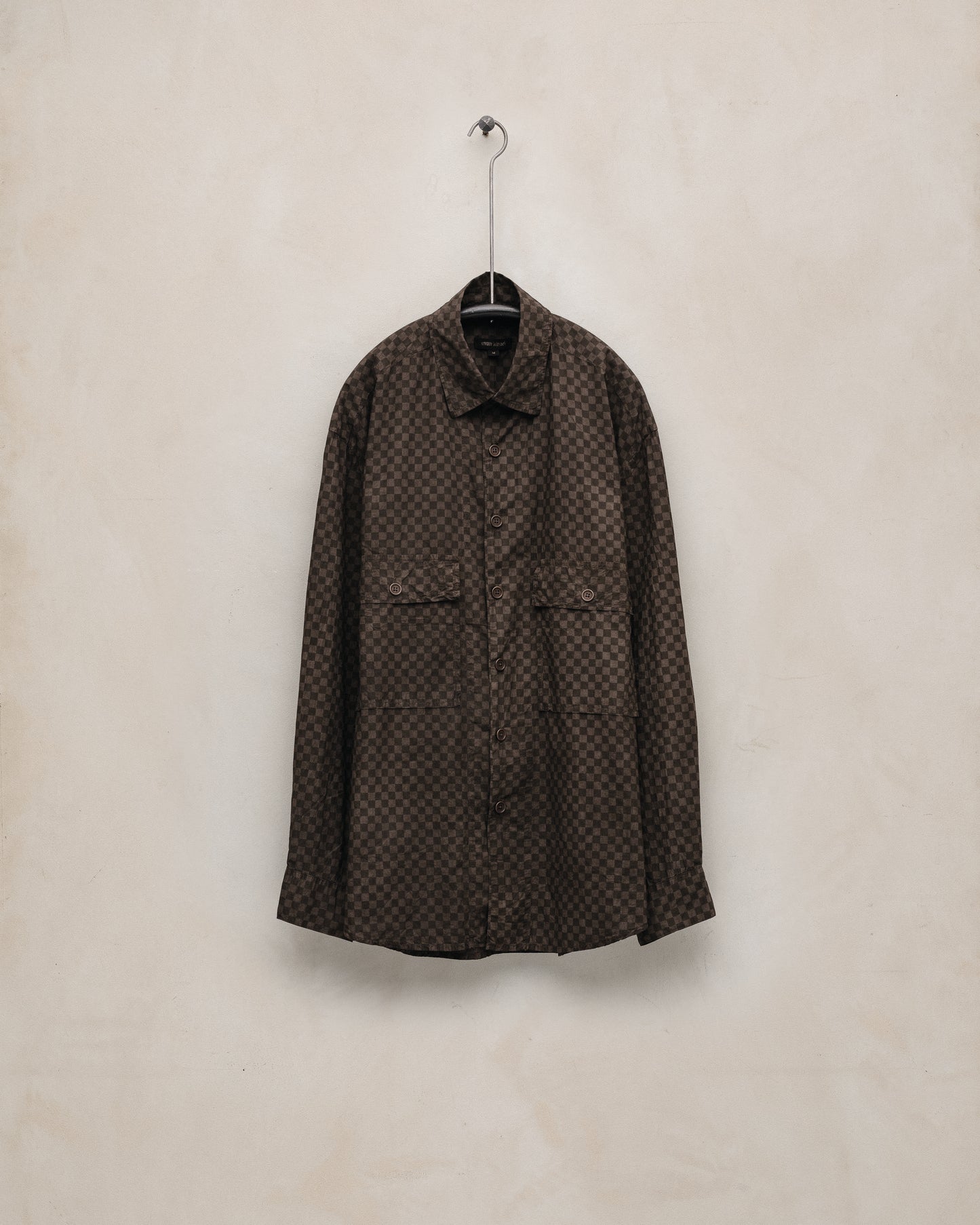
A looser fitting buttondown with large dropped chest pockets, corozo buttons, french seams, squared cuffs, pointed collar, more pronounced curved hem and wide stitched placket. This shirt is cut more relaxed in the chest with a dropped shoulder and a slightly longer body compared to the Two Pocket Shirt.
Hand numbered edition made in Japan.
Read more about the screen printers and mud dye process here.
This ultra lightweight cotton cloth uses a very fine yarn size to achieve a soft, unstructured shirting ideal for warmer temperatures. The cloth was hand screen printed with natural pigments in a 100 year old Kyoto workshop, before being mud overdyed in Amami Oshima.
Oliver is 6'1" and wearing a size medium.
Hand or delicate machine wash cold, hang dry.
Write info@evankinori.com if you have further questions.
Write info@evankinori.com if you have further questions.
line


in the same cloth
-
Big Shirt Two Hand Dyed Screen Print Cotton Batiste (Mud Dye)
Regular price $795Regular priceUnit price per -
Bandana Hand Dyed Screen Print Cotton Batiste (Mud Dye)
Regular price $125Regular priceUnit price per

