Skip to product information
1 of 1

style / Hooded Sweatshirt

cloth / Hemp/Cotton (Mud Dye)

Price / 

Regular price $395
Regular price Sale price $395
Sale Out of stock
Shipping calculated at checkout.
Size

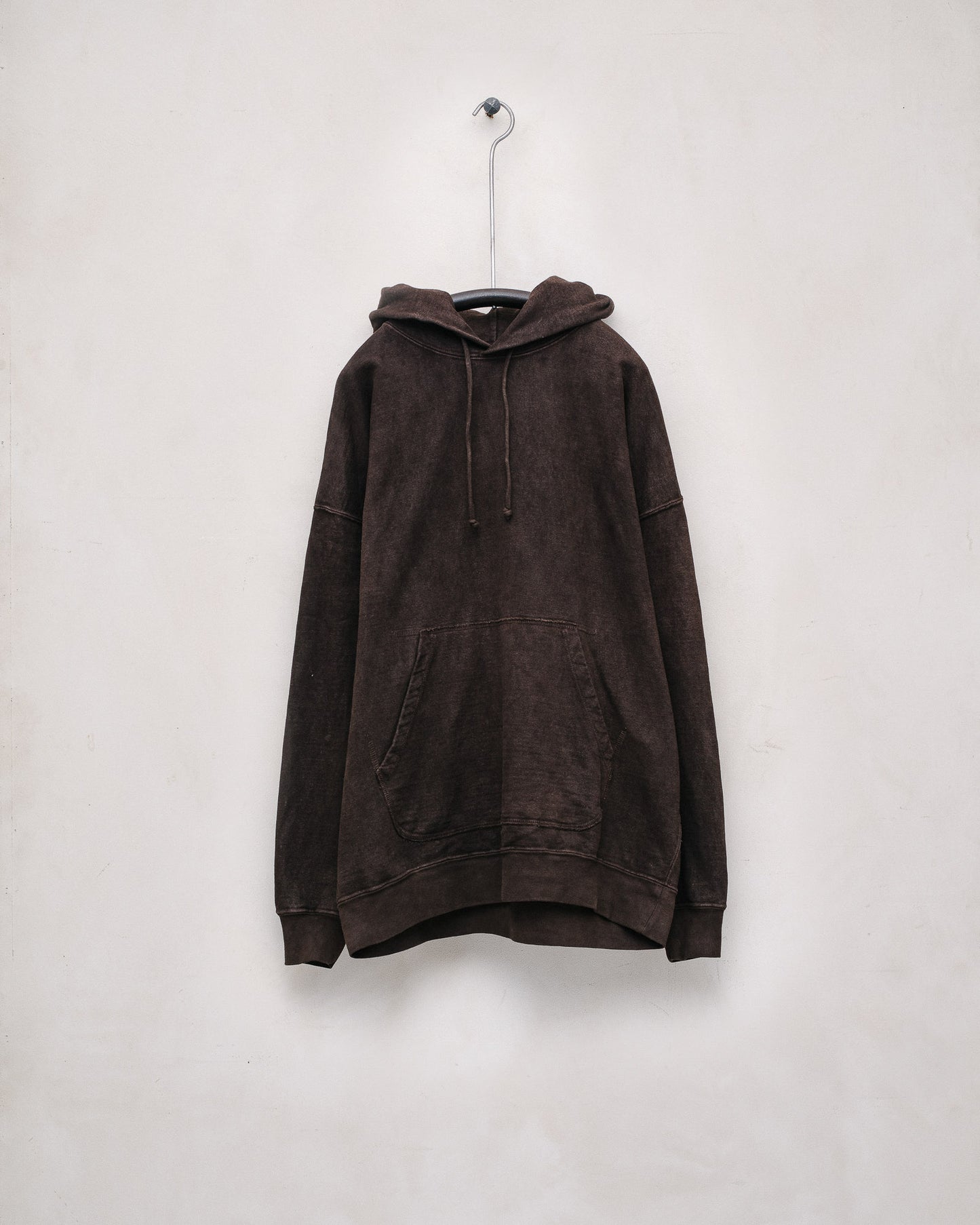
Hooded sweatshirt with a relaxed fit, dropped shoulder seam, ribbed cuff and hem.


Made in California in collaboration with Lady White Company.

This garment was over-dyed by hand in the iron rich soil of Amami Oshima (Japan). Referred to as mud dye, this process relies on multiple passes through a two step process - first the garment is soaked in a concentrate of boiled local wood chips (for high tannin content) before dyeing in the iron rich mud. The combination can create browns, purples, and even blacks that prove to be durable against washing and heavy use.

55% hemp/45% organic cotton blend jersey.
Hand or machine wash cold with dark colors, tumble dry low heat or hang dry. If hand washing, do not soak.
Amami is the only place in Japan and one of the few places in the world where you can still find the unbroken tradition of mud dyeing. Until relatively recently, dorozome was used mainly for silk yarn dyeing, that would then be handwoven into fabric for kimono making - a cloth known as Oshima Tsumugi. In the past two decades or so, the dorozome tradition has shifted to garment dyeing, as the handwoven silk industry has decreased significantly.

Dorozome relies entirely on the interaction between iron and tannins. The achievement of rich dark browns and even near black is unique in the realm of natural dyeing, made even more special by its marked colorfastness in the face of UV exposure and regular washing.

It is from the woodchips of the Sharinbai tree that the incredibly vibrant orange liquid emerges after days of boiling, which in turn makes up the first stage of the dyeing process.  Depending on the density of the cloth, a garment can require 12 cycles of hand dyeing to achieve the bright orange tannic coloring evenly throughout the fabric. After the right saturation is achieved, the garments are ready to enter the dilutions of naturally iron rich soil, also native to this volcanic island, which causes a reaction in the tannins to shift from orange to darker browns. 

It is likely not a secret that I have a penchant for shades of brown, as well as a deep respect and admiration for natural dyeing, so the combination makes it rather clear just how much this tradition resonates.

More on the place & the process in the short film by Allen Danze in the notes post -

View full details